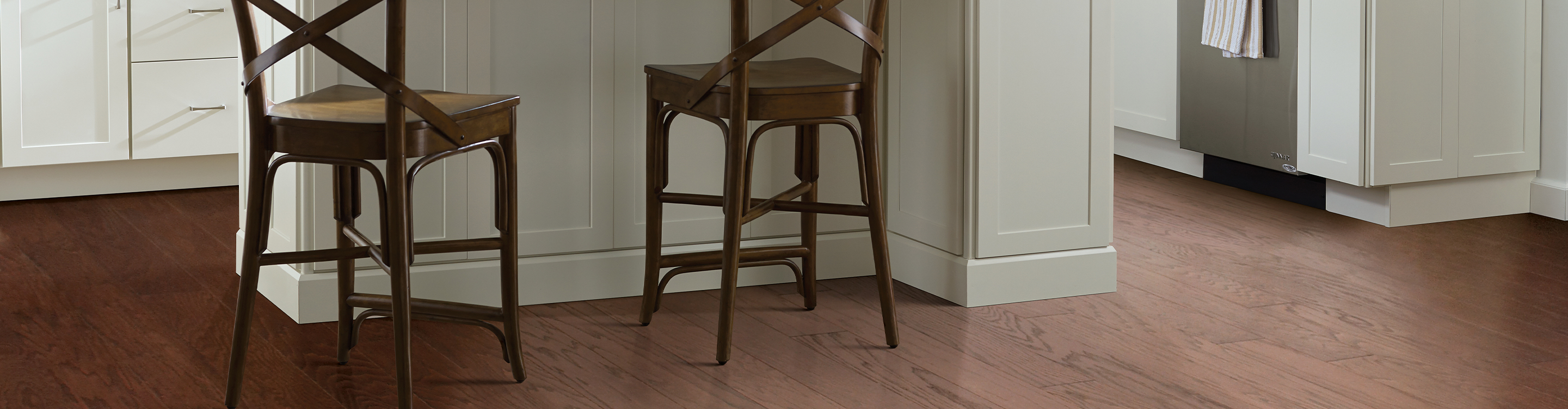
Red oak is one of the most widely installed hardwood species in North America, prized for its warm tones, prominent grain, and reliable durability. Whether you're choosing a floor for the first time or comparing species, here's what to know before you decide.
Red oak hardwood floors are known and loved for their reddish hues and natural beauty. Thanks to their appealing nature, red oak wood is common for projects like kitchen cabinets, paneling, doors, and millwork, and today it is an excellent flooring option. Indigenous to North America, red oak trees grow in many parts of Mexico, Central America, the United States, and Southeast Canada. Growing as large as one hundred feet tall or more, red oak trees produces hardwood that is good-looking as well as useful.
As a flooring species, red oak has remained one of the most popular choices in the United States for decades. Its availability from domestic mills keeps it consistently accessible, and its versatility across both traditional and contemporary interiors has made it a reliable option for first-time hardwood buyers and seasoned renovators alike. As your trusted flooring partner, we're here to help you explore red oak hardwood in a range of grades and finishes to suit different design goals.
The grain of red oak differs significantly from white oak. While it is a straight-grained wood, when compared to white oak, red oak has lines that are wider and even curly in some spots. Wavy lines in hardwood mean that the grain does not run vertically in line with the tree, but instead, the direction of the lines run more "wildly." Red oak is coarse-grained and uneven, meaning that it is not necessarily smooth to the touch.
The color variations in the red oak species of hardwood range from light white to golden-brown, with hints of pink and red throughout. Red oak hardwood floors can be stained any color, and the stain will take to the floors well. Because this type of hardwood has traces of red and pink, staining it can bring about the natural characteristics and brighten the grain. Red oak hardwood floors will also change color over time, deepening in color and tone.
When choosing a stain direction for red oak, the natural undertones play a real role in the result. Light and natural finishes let the wood's warm pink tones show through, giving floors a classic, inviting look. Medium warm stains in amber and honey tones complement the grain without fighting the undertones. Darker espresso and ebony stains are achievable, but the red pigment in the wood can shift the final tone, so reviewing samples in your space before committing is recommended. Red oak's open grain means stain absorbs evenly and consistently, which makes it a forgiving species for a range of color directions.
As a top contender for one of the most well-known flooring choices, red oak hardwood is a sturdy floor that resists dents well. While it is not as hard as white oak, red oak does still an excellent job of handling tough days with kids, pets, and guests alike.
Red oak and white oak are both domestic hardwoods, but they perform and look differently in a flooring application. White oak has a slightly higher Janka hardness rating of 1,360 compared to red oak's 1,290, making it marginally more resistant to dents and heavy wear, though both species are well-suited to residential use. The grain difference is also visible: red oak has a wider, more open grain pattern with pronounced rays and occasional waviness, while white oak has a tighter, more uniform grain that reads as quieter underfoot.
In terms of color, red oak carries the warm pink and reddish undertones that give it its name, while white oak runs cooler with tan and beige tones that lean neutral. That difference matters most when staining. White oak accepts cool-toned and gray stains more predictably, while red oak's warm undertones can cause cool stains to read differently than expected. For homeowners who want a specific stain outcome, white oak offers more control. For homeowners who prefer warm, traditional hardwood character, red oak is a proven and accessible choice.
Yes, red oak is one of the most widely used hardwood flooring species in North America, and for good reason. It has a Janka hardness rating of 1,290, which puts it in a solid range for residential flooring, including rooms with regular foot traffic, pets, and kids. Its open grain accepts stain readily and evenly, giving homeowners flexibility in how the finished floor looks. Red oak is also a domestic species, which contributes to its consistent availability. Ask your local flooring expert about grade, width, and finish options to find the right configuration for your space.
With proper care, red oak hardwood floors can last 50 years or longer. One of the key advantages of solid hardwood is that it can be sanded and refinished multiple times over its life, which restores the surface and extends the floor's lifespan well beyond what most other flooring types can offer. How long a red oak floor actually lasts depends on factors including installation quality, subfloor condition, foot traffic levels, and how consistently the floor is maintained. Following the manufacturer's recommended maintenance and refinishing schedule is the most reliable way to protect the investment and keep the floor looking its best over time.
Red oak is a well-performing species, but it does have characteristics worth understanding before purchase. Its open, coarse grain makes it more porous than tighter-grained species like white oak, which can make it slightly more susceptible to absorbing moisture if spills are not addressed promptly. The wider grain can also show scratches and surface wear more visibly in high-traffic areas over time. Red oak's warm pink and red undertones can complicate stain selection, particularly for homeowners who want cool-toned or gray finishes. It is also softer than hickory or maple, so it may not be the best fit for households with very heavy use or large pets. For most residential applications, though, these are manageable trade-offs rather than disqualifying factors.
Red oak is generally one of the more accessible domestic hardwood options, which is part of why it has remained so popular. Compared to white oak, hickory, or walnut, red oak tends to come in at a lower point on the price spectrum, making it a practical entry point for homeowners who want solid hardwood without the premium associated with rarer or more in-demand species. The final installed cost depends on the grade, finish type, and local installation rates. Your flooring expert can walk you through the available options and help you find a configuration that fits your goals.
Thank you for contacting Carpet One Floor & Home. Your local flooring expert will reach out to you regarding your inquiry.